Tuesday 6 October 2026 · BMA Health Department, Bangkok City Hall 2, Din Daeng
Protecting Bangkok's flood shelters against dengue
Rotary Club of Bangkok Delivers Mosquito Repellent to Bangkok Flood Shelters as Dengue Risk Rises
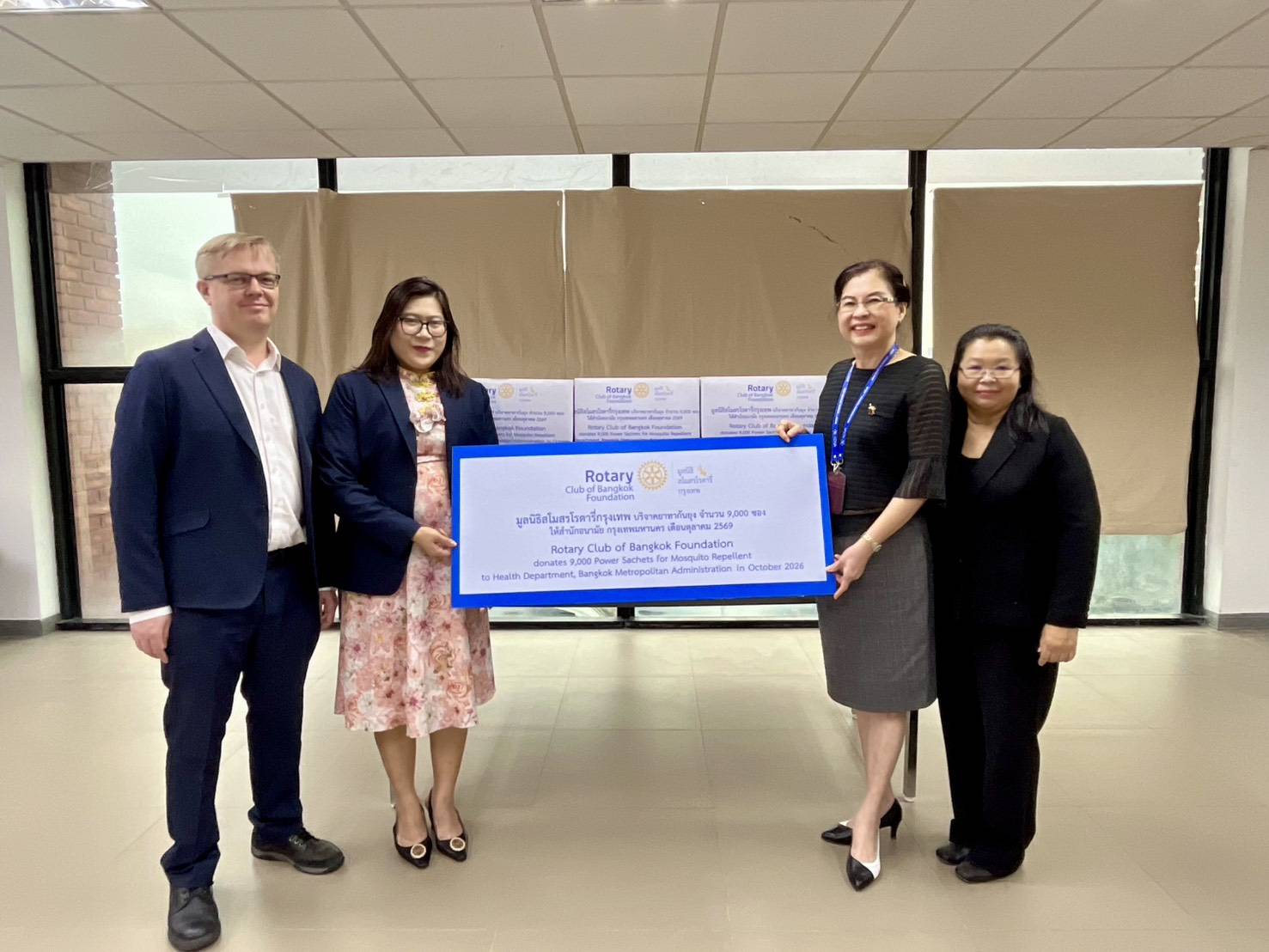
BANGKOK, 6 October 2026. The Rotary Club of Bangkok today handed over 9,000 sachets of mosquito repellent to the Health Department of the Bangkok Metropolitan Administration (BMA) to protect people living and working in the city’s temporary flood shelters against dengue fever. It is the first support from the club’s RCB Bangkok Flood Emergency Fund, set up on 27 September as the floodwaters rose, and it went from request to delivery in a matter of days.
Flood Emergency Fund: Mosquito Repellent for Bangkok Flood Shelters
Jean-Pierre Verbiest
2026-10-05 17:00:00Z
0
2026-27,BMA,Bangkok Floods 2026,Community Service,Dengue Prevention,Disease Prevention and Treatment,RCB Bangkok Flood Emergency Fund,Rotary Club of Bangkok South
Rotary Club of Bangkok & Bangkok Charity Orchestra
Moonlight & Melodies
Sunday 4 October 2026 · Aksra Theatre, Bangkok
A Night of Music That Gives
A starry night at Aksra Theatre
On Sunday 4 October 2026, the Rotary Club of Bangkok and the Bangkok Charity Orchestra (BCO) filled Aksra Theatre with music. Moonlight & Melodies was a fabulous evening, and every baht raised is going to Klong Lad Krabang School in Samut Prakan.
Eight members and partners from the Rotary Club of Bangkok attended the 2026 Rotary International Convention in Taipei, Taiwan, from 13–17 June 2026. The convention provided valuable opportunities to learn, connect with Rotarians from around the world, strengthen relationships with sister clubs, and participate in meaningful Rotary service and fellowship activities.
The Rotary Club of Bangkok has completed its support to a renovation project at Wat Thongthaeng Nisayarom School in Lopburi Province, improving the school’s kitchen, canteen and classroom facilities. The project, funded with a budget of THB 88,284, provides students with a safer dining environment and a more comfortable space for learning. The handover took place on 15 June 2026 and was attended by President Nick, Khun Ae, PP Maleeratna and PP Mark.
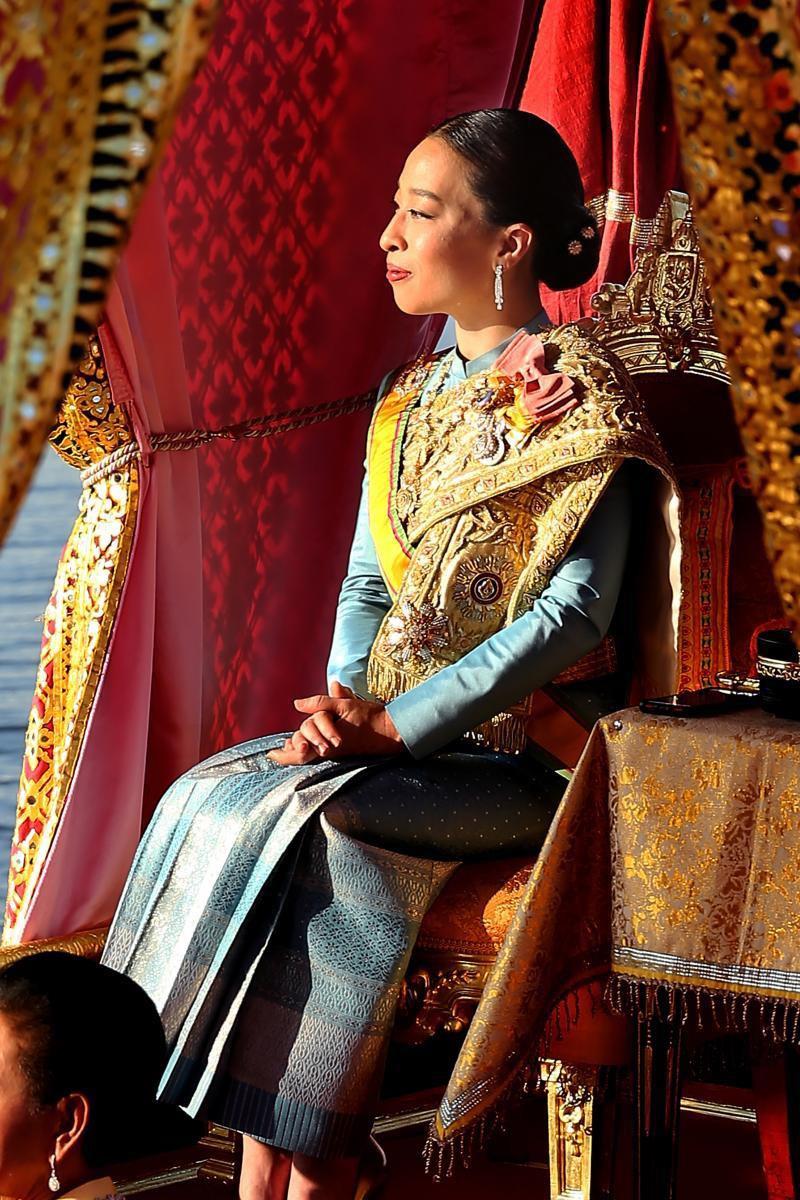
The Rotary Club of Bangkok joins the Thai people and the international community in mourning the passing of Her Royal Highness Princess Bajrakitiyabha.
Known throughout Thailand and the wider world as “the Lawyer Princess,” Her Royal Highness devoted her life to justice, human dignity, and service to the vulnerable. Her passing marks the loss of an exceptional person whose life embodied the spirit of Service Above Self.
More than twenty nationalities, professionals across every industry, weekly meetings since 1930. Here's what the Rotary Club of Bangkok actually looks like.
When sixty-nine people gathered at Phya Thai Palace in September 1930 to found the Rotary Club of Bangkok, they came from fifteen countries. Thai royalty alongside American trade commissioners. Japanese trading executives alongside British consuls. Dutch diplomats, Indian merchants, Swiss engineers — all in the same room, signing the same founding document.
Ninety-five years later, not much has changed in that regard.
The Rotary Club of Bangkok is proud to sponsor three dynamic Rotaract clubs whose members are already making a meaningful difference in their communities. The Rotaract Club of Mahidol University, the Rotaract Club of Chulalongkorn University, and the Rotaract Club of Siem Reap each work in distinct settings, yet all share a strong commitment to service, leadership, and practical action. Together, they demonstrate that Rotaract is not simply a training ground for future leaders, but a movement of young people delivering real results today.
Rotary Club of Bangkok,APRRC,Biosand,Cambodia,Chao Phraya,Chonburi,Chulalongkorn University,Clean Water,Community Service,Days for Girls,District 3350,Education,Environmental Protection,Girls Empowerment,International Collaboration,Mahidol University,Mangrove Restoration,Marine Conservation,Mukdahan,Nakhon Nayok,Public Health,Rotaract,Siem Reap,Thailand,University Malaysia Sabah,Uttaradit,Village School Library,WASH,Youth Leadership,Youth Service
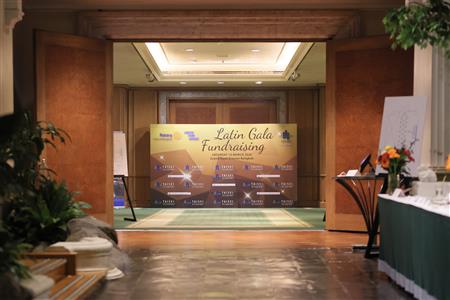
On 14 March 2026, the Rotary Club of Bangkok welcomed 143 guests, including ambassadors, diplomats, corporate leaders, members, and friends of Rotary, to the Grand Ballroom of the Grand Hyatt Erawan Bangkok for its Fundraising Latin Gala. The evening celebrated international fellowship, Latin culture, and the club’s humanitarian mission, while successfully raising THB 763,383 in support of the club’s 2025–2026 flagship service initiatives.
Rotary Club of Bangkok Hosts Successful Fundraising Latin Gala to Support 2025–2026 Community Service Initiatives
Sayel Cortes Berrueta
2026-03-17 17:00:00Z
0
Latin Gala,2025-2026 Initiatives,Charity Event,Community Service,Diplomacy,Fundraising,Grand Hyatt Erawan,Humanitarian Projects,International Fellowship,Rotary Club of Bangkok
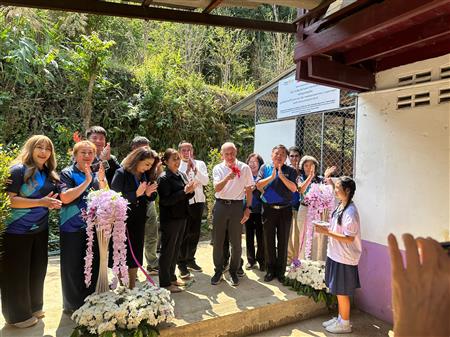
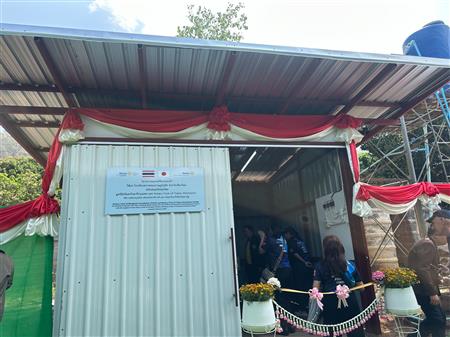
On 17th March, we joined the Rotary Club of Sarapee to inaugurate the refurbishment of a clean drinking water system at Wat Ban Lao School in Mae Taeng District, Chiang Mai. The project restores access to safe drinking water for 140 students, most of whom are from minority hilltribe communities, replacing worn components in a system originally installed seven years earlier.
The refurbishment was generously sponsored by C&C Travel of Copenhagen, continuing their long-standing support for the school and its students.
Clean Drinking Water System Refurbishment at Wat Ban Lao School, Chiang Mai
Chiemi Svensson
2026-03-16 17:00:00Z
0
Clean Water,Chiang Mai,Community Health,Disease Prevention,Hilltribe Communities,Rotary Club of Bangkok,Rotary Club of Sarapee,School Support,Sustainable Projects,Thailand Projects,Water Project
On 16th March 2026, we inaugurated a Clean Drinking Water System at Sai Thong Rat Uthit School in the Samoeng-Tai district of Chiang Mai Province, in partnership with the Rotary Club of Tokyo Shintoshin and the Rotary Club of Sarapee. The project ensures safe, reliable drinking water for 138 students and staff, replacing an outdated system that had relied on contaminated well water.
The inauguration was attended by Past President Chiemi Svensson, Past President John Quarmby, and President Hiroyoshi Aoki of the Rotary Club of Tokyo Shintoshin, reflecting the strong international collaboration behind the project.
Clean Drinking Water System Inaugurated at Sai Thong Rat Uthit School, Chiang Mai
Chiemi Svensson
2026-03-15 17:00:00Z
0
Basic Education and Literacy,Chiang Mai,Clean Water,Community Impact,Disease Prevention and Treatment,Global Grant,Rotary Club of Bangkok,Rotary Club of Sarapee,Rotary Club of Tokyo Shintoshin,School Support,Thailand Projects,Water Project
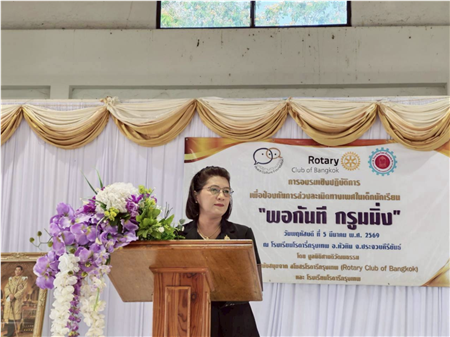
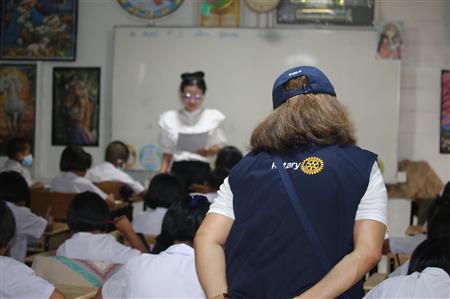
On 5 March 2026, the Rotary Club of Bangkok and the Peace Culture Foundation ran a grooming prevention workshop at Rotary Bangkok School. The students' knowledge scores went up by 31% on average. One area improved by 62%.
Grooming — the process by which predators build trust with children before sexually abusing them — is not a subject that typically makes it into a school day at a rural school in Prachuap Kiri Khan Province.
On 5 March 2026, the Rotary Club of Bangkok helped change that for 218 students at Rotary Bangkok School.
A delegation from the Rotary Club of Bangkok travelled to Sangklaburi from 1–3 March 2026 to begin the implementation phase of Global Grant GG257187, a project designed to strengthen education and psychosocial support for vulnerable migrant and stateless children served by the Children of the Forest Foundation.
On 28 February 2026, members and friends of the Rotary Club of Bangkok took to the water at SUP Station Thailand, Pathum Thani, for a hands-on clean-up of the Chao Phraya River. What began as an environmental initiative quickly became an afternoon of teamwork, learning and unexpected beauty resulting in 57 kilograms of waste removed from one of Thailand’s most important waterways.
The Rotary Club of Bangkok has been investing in young people since 1969. Three Rotaract clubs, nursing scholarships, and a careers programme — all built on a simple idea: if you want a better future, you have to help people build it.
The biggest long-term investment any Rotary club can make isn't in buildings or water filters. It's in people — young people who learn to serve, to lead, and to see the world as something they can improve.
The Rotary Club of Bangkok Foundation is a Thai Ministry of Finance-approved charitable foundation. Donations are tax-deductible in Thailand. Here is what it is, how it works, and where the money goes.
Giving is easier when the mechanism is simple. The Rotary Club of Bangkok Foundation (RCBF) exists to make it simple.
89% of our members contributed to the Rotary Foundation in 2024/25. Eighteen members hold Major Donor status. One member has given over half a million US dollars. Here is what that record looks like and why it matters.
The Rotary Foundation is not a charity that Rotarians support from the outside. Every dollar members contribute comes back as Global Grants, scholarships, polio eradication funding, and peace fellowships, multiplied by Rotary's matching mechanisms. It is the engine of everything.
We have been building our contribution to the Foundation for decades.
From inside a Mercedes-Benz factory to supporting future nurses and empowering women through vocational training, the Rotary Club of Bangkok’s Vocational Service initiatives continue to connect professional insight with meaningful community impact.
Vocational Service,Electric Vehicles,Factory Visit,Healthcare,Kua Karun Nursing College,Manufacturing,Mercedes-Benz,Nursing Scholarships,Rotary Club of Bangkok,Rotary Club of Bangkok,Samut Prakan,Siriraj Hospital,Thailand,Thonburi Women's Prison
The Rotary Club of Bangkok managed six active Global Grant projects in 2024–25. Clean water, cerebral palsy care, peace education, HIV/AIDS home care, stateless children getting into school. Here's what each one actually does.
The Rotary Foundation's Global Grant programme works like this: a club proposes a project that meets Rotary's criteria, and the Foundation matches the club's contribution. Partner clubs from other countries add their funding, and the Foundation matches those too. A well-designed project can end up with funding many times what the host club put in.
We are one of the most active Global Grant clubs in District 3350. In 2024–25, we managed or participated in six active projects. Here's what they are.
Rotary Foundation,Chiang Rai,Children of the Forest,Global Grants,HIV AIDS,Kanchanaburi,Nakhon Si Thammarat,Ubon Ratchathani,cerebral palsy,clean water,peace education
Sixteen nursing students from the 2021–22 scholarship cohort have graduated and are working in Bangkok hospitals. This is what a scholarship programme looks like and the scale of what it is part of.
In 2021–22, the Rotary Club of Bangkok funded scholarships for eighteen second-year nursing students at two universities: ten at Kuakarun Faculty of Nursing at Navamindradhiraj University, and eight at Mahidol University.
Nursing is a four-year degree. The scholarships were renewable annually, based on academic performance, covering the students' second, third, and fourth years. Each student received enough to cover a meaningful portion of course costs enough to relieve the financial pressure that causes nursing students from lower-income families to drop out before qualifying.
In 1966, we donated 50,000 Baht to build a school in a small village three hours south of Bangkok. The Princess Mother came to open it and gave it our name. Nearly 800 children study there today — and we're still involved.
In 1966, the Rotary Club of Bangkok donated 50,000 Baht to build a school in Nong Plub, a small community in Prachuap Kiri Khan Province, about three hours south of Bangkok.
Construction took three years. When the school opened in 1969, H.R.H. the Princess Mother — "Somdej Yaa," as she was affectionately known — came to visit and gave the school a name: Rotary Bangkok School (โรงเรียนโรตารี่กรุงเทพ). The first classroom building, a single-storey wooden structure, was named the "Somdej Yaa Building" in her honour. It still stands.
Twelve months under President Danu Chotikapanich. Floods, an earthquake, a gala that raised over a million baht, six Global Grant projects, and a school visit three hours south of Bangkok. Here's what actually happened.
Every Rotary year runs from 1 July to 30 June. The 2024–25 year, under President Danu Chotikapanich and Rotary International's theme "The Magic of Rotary," was a busy one. New members joined, new projects started, international visits happened across six countries, and a number of long-running grants moved toward completion.
If you've ever wondered what you'd walk into at a Rotary Club of Bangkok meeting, here's an honest account.
Every Thursday, at lunchtime, members of the Rotary Club of Bangkok meet for the weekly meeting. It has happened every Thursday — with very few exceptions — since October 1930, when the newly chartered Club moved its meetings to Phya Thai Palace Hotel. Ninety-five years later, the hotel has changed (the Grand Hyatt Erawan hosts many meetings now), but the rhythm hasn't.
Here's what you'd actually find if you came along.
Clean water in mountain schools, Braille machines for blind children, a rebuilt canteen for 303 students who'd been eating in classrooms for twenty-five years. A look at the Rotary Club of Bangkok's community work in recent years.
Rotary's community service isn't about grand gestures. It's about finding a real problem, getting the right partners together, doing the work, and moving on to the next one.
Here's a picture of what that has looked like for the Rotary Club of Bangkok over the past few years.
The Rotary Club of Bangkok is the oldest Rotary club in Thailand. This is how it started — and how it got to where it is today.
On 17 September 1930, sixty-nine men gathered at Phya Thai Palace in Bangkok. They were diplomats, doctors, engineers, merchants, lawyers, and members of the Thai royal family. They came from fifteen different countries — Siam, the United States, Britain, the Netherlands, Japan, India, and more. What they had in common was a belief that people of standing in a community should use their influence and skills for the good of others.
That meeting founded the Rotary Club of Bangkok — the first Rotary club in Thailand.
From a Dalí-themed Italian restaurant to a former royal palace, from Oktoberfest to a Chao Phraya sunset, a look at the Club's 2024–25 fellowship year.
How do you keep a club of more than eighty people from twenty-plus nationalities genuinely connected across twelve months of busy working lives?
In 2024–25, the Fellowship Committee's answer was a varied, well-thought-out programme — something different nearly every month, mixing good food, interesting locations, and the particular pleasure of spending time with people you wouldn't otherwise meet.
H.E. Bhichai Rattakul stands as one of the most influential figures in the history of Rotary in Thailand and globally. A Past Rotary International President, Major Donor, and lifelong servant of the Rotary ideal, his six decades of dedication helped shape the growth and spirit of Rotary across generations.
From his beginnings as a charter member of the Rotary Club of Dhonburi in 1958 to becoming the first Thai President of Rotary International in 2002–03, his life was defined by leadership, humility, and an unwavering commitment to service above self.
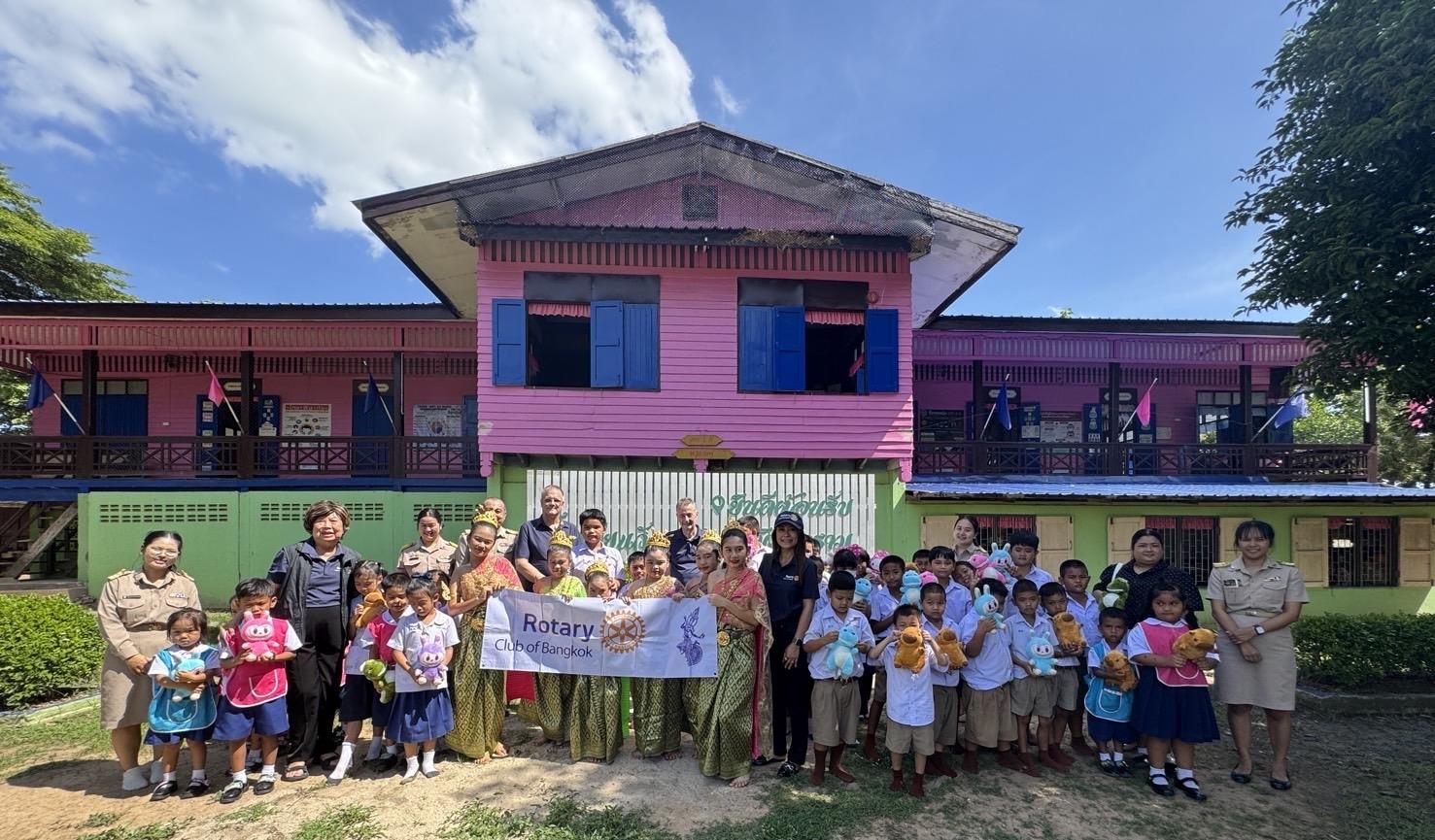
In April 2025, thirteen Club members and their families spent Songkran at the school we built in 1966. Three hours south of Bangkok, traditional dances, water-pouring, and a building that needs saving.
The school that carries our name is in Nong Plub, Prachuap Kiri Khan Province — three hours south of Bangkok. We built it in 1966, donated the 50,000 Baht that paid for the first classroom. The Princess Mother came when it was done in 1969, named it "Rotary Bangkok School," and gave her own name to the original building — the Somdej Yaa Building — which still stands today.
On 25 April 2025, President Danu Chotikapanich led thirteen members and their families down for the annual visit. It fell in Songkran season.
When a 7.7-magnitude earthquake hit Myanmar on 28 March 2025, the Rotary Club of Bangkok collected 329,535 Baht and transferred it to disaster relief in less than a week.
The earthquake struck at 12:50pm on Friday, 28 March 2025.
By the following Thursday — one week later, at the Club's regular weekly meeting — members had contributed 329,535.60 Baht to the District 3350 Earthquake Disaster Relief Fund. The Fund had already started disbursing money on the ground.
On 22 March 2025, the Rotary Club of Bangkok held its annual gala at the Grand Hyatt Erawan. Thailand's first pop-opera group performed. The night raised over a million baht for the Club's community projects.
There's a particular kind of Bangkok evening — dressed up, Grand Hyatt, a full room, something unexpected on the stage — that people talk about for months afterwards. "Spread the Magic" on 22 March 2025 was that kind of evening.
On 28 February 2025, thirty-five children with cerebral palsy in Nakhon Si Thammarat Province received wheelchairs. Behind each one is a family whose daily life just got a little more manageable.
On 28 February 2025, a group of Rotarians gathered at a care centre in Nakhon Si Thammarat Province, 780 kilometres south of Bangkok.
Thirty-five wheelchairs were distributed to children with cerebral palsy and their families.
A 110,700 Baht joint project with a Japanese Rotary club has installed a clean water system at a school in Chiangmai. 96 children and 14 teachers now have safe water. Here's how it happened.
Before the project, the water at Wat Nong Luang School in Chiangmai Province came from a well.
Independent testing found total dissolved solids at 459 mg/L — well above safe levels — along with Coliform bacteria and E. coli.
On 22 February 2025, members of the Rotaract Club of Mahidol University spent a day on the Chao Phraya River on stand-up paddleboards, collecting rubbish. It's an unusual project for medical students. That's partly the point.
The Chao Phraya is Bangkok's spine — 372 kilometres of waterway that has shaped the city since its founding. It also receives a significant volume of waste: plastic bottles, food packaging, polystyrene, everything that ends up in a river running through a city of ten million people.
Getting rubbish out of a river from a paddleboard is a logistical challenge. You have to balance on the board. You have to dodge river traffic. You have to reach far enough to get the floating debris without going in. You have to collect what you find, bring it back to shore, and sort it — recyclable from non-recyclable — before anything useful can be said about what you found.
An estimated 500 million people worldwide became infected. Many cities closed theaters and cinemas, and placed restrictions on public gatherings. Rotary clubs adjusted their activities while also helping the sick.
This is how Rotary responded to the influenza pandemic that began in 1918 and came in three waves, lasting more than a year.
The Rotary Club of Berkeley, California, USA, meets in John Hinkel Park during the 1918 flu pandemic.
Photo by Edwin J. McCullagh, 1931-32 club president. Courtesy of the Rotary Club of Berkeley.
Rotary and the United Nations have a shared history of working toward peace and addressing humanitarian issues around the world.
During World War II, Rotary informed and educated members about the formation of the United Nations and the importance of planning for peace. Materials such as the booklet “From Here On!” and articles in The Rotarian helped members understand the UN before it was formally established and follow its work after its charter.
Many countries were fighting the war when the term “United Nations” was first used officially in the 1942 “Declaration by United Nations.” The 26 nations that signed it pledged to uphold the ideals expressed by the United States and the United Kingdom the previous year of the common principles “on which they based their hopes for a better future for the world.”
Women are active participants in Rotary, serving their communities in increasing numbers and serving in leadership positions in Rotary. The 1989 Council on Legislation vote to admit women into Rotary clubs worldwide remains a watershed moment in the history of Rotary.
“My fellow delegates, I would like to remind you that the world of 1989 is very different to the world of 1905. I sincerely believe that Rotary has to adapt itself to a changing world,” said Frank J. Devlyn, who would go on to become RI president in 2000-01.
The vote followed the decades-long efforts of men and women from all over the Rotary world to allow the admission of women into Rotary clubs, and several close votes at previous Council meetings.
Every hero has an origin story. “I was 10 years old when the entire journey started,” explains Binish Desai. It began with a cartoon called Captain Planet, an animated TV series from the 1990s about an environmentalist with superpowers. Desai can still recite the show’s refrain: Captain Planet, he’s our hero / Gonna take pollution down to zero! “That tagline stuck in my mind,” he says. “I wanted to do something to help Captain Planet.”
In early 1919, Rotarian Roger Pinneo of Seattle, Washington, USA, traveled to the Philippines to try to organize a Rotary club in Manila. Leon J. Lambert, a Manila business leader helped Pinneo establish the club. Several months later, on 1 June 1919, the Rotary Club of Manila was chartered and became the first Rotary club in Asia.
The club would be the only one in the country for more than 12 years. Eventually, Manila club members organized Rotary clubs in the Philippine cities of Cebu (1932) and Iloilo (1933). Iloilo club members then started a club in Bacolod (1937), and Rotary continued to expand across the country.


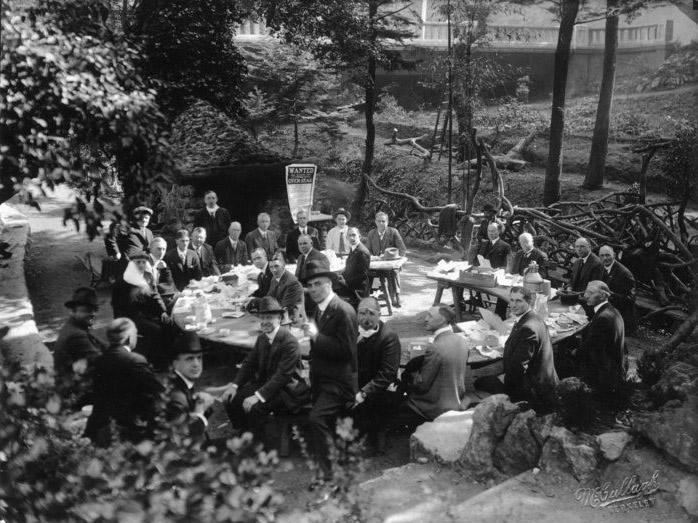 An estimated 500 million people worldwide became infected. Many cities closed theaters and cinemas, and placed restrictions on public gatherings. Rotary clubs adjusted their activities while also helping the sick.
 Rotary and the United Nations have a shared history of working toward peace and addressing humanitarian issues around the world.
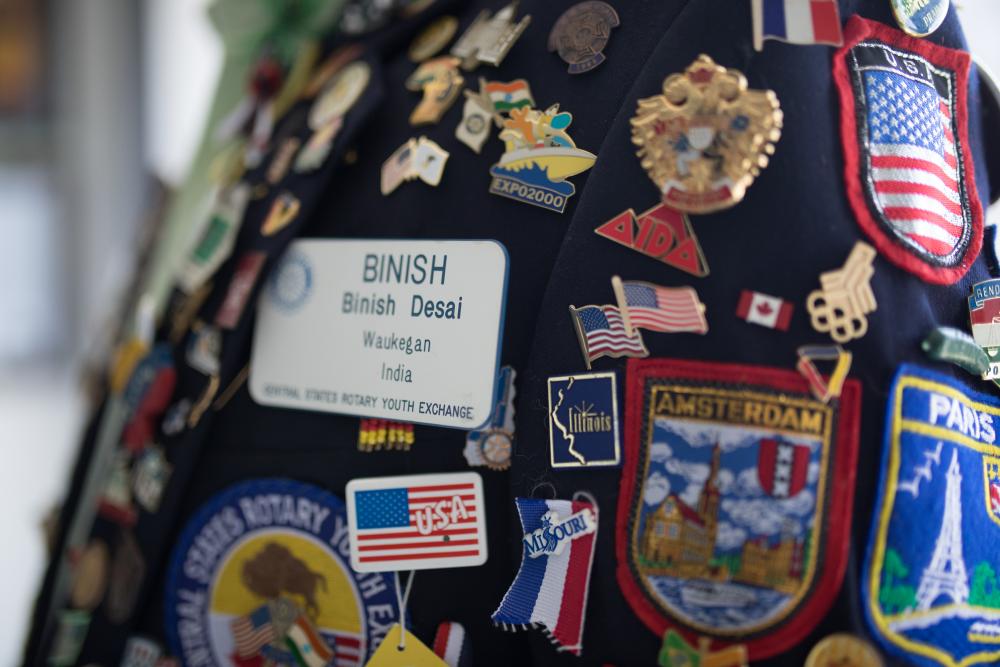 Every hero has an origin story. “I was 10 years old when the entire journey started,” explains Binish Desai. It began with a cartoon called Captain Planet, an animated TV series from the 1990s about an environmentalist with superpowers. Desai can still recite the show’s refrain: Captain Planet, he’s our hero / Gonna take pollution down to zero! “That tagline stuck in my mind,” he says. “I wanted to do something to help Captain Planet.”
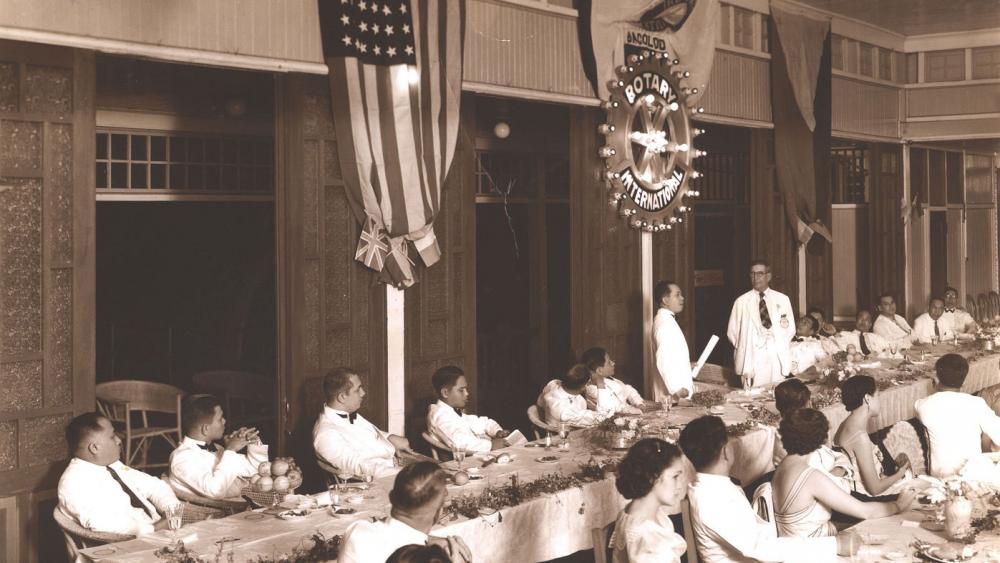 In early 1919, Rotarian Roger Pinneo of Seattle, Washington, USA, traveled to the Philippines to try to organize a Rotary club in Manila. Leon J. Lambert, a Manila business leader helped Pinneo establish the club. Several months later, on 1 June 1919, the Rotary Club of Manila was chartered and became the first Rotary club in Asia.